
Introduction
One of the most frequent issues that patients have to relate to when having persistent lower back pain is slip disc treatment. It is a small detail that many suppose; a slipped disc (intervertebral disc herniation) may result in much pain as well as nerve-related symptoms, if not treated. Thus, knowledge about the right slipped disc treatment, symptoms and recovery period is crucial to success in learning how to manage it.
What is a Slipped Disc?
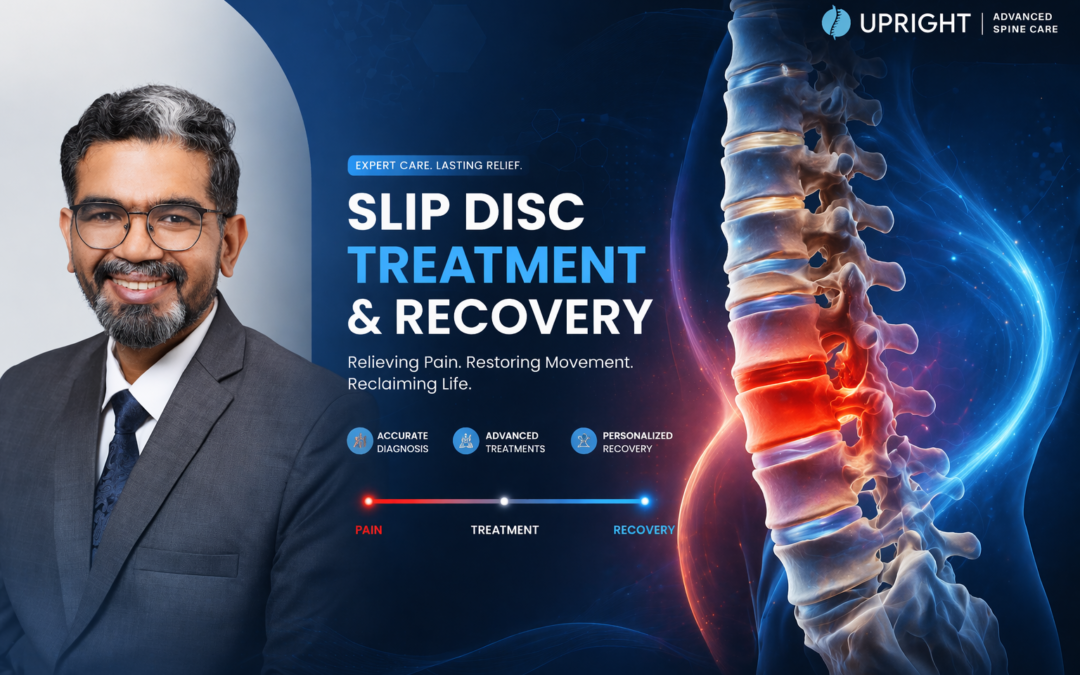
A slipped disc is a situation whereby the soft inner part of an intervertebral disk is forced out through the outermost part. Consequently, it can compress adjacent nerves and result in pain.
The spine is made up of:
- Vertebrae
- Interspinal discs (shock absorbers)
- Nerves
- Vehiculating the muscles and ligaments
In the circumstance where the disc is torn, maimed or lost, then it may cause a protrusion or herniation, normally known as a slipped disc.
Slip Disc Symptoms
Early identification of slipped disc symptoms can be used to avoid complications. The symptoms can be different based on the region affected.
Common symptoms include:
- Lower back pain
- Radi Radiating pain to the leg (sciatica)
- Numbness or tingling
- Muscle weakness
- Movement or bending disability
These symptoms are evidence of nerve root compression in many instances, particularly around the lumbar spine.
Slipped Disc Causes
The cause of a slipped disc may be related to several factors:
- Poor posture
- Sudden heavy lifting
- Age-related degeneration
- Sedentary lifestyle
- Repetitive strain
The effects of this complicated disc structure over time expose her to the danger of herniation.
Slipped Disc: Treatment
The slipped disc treatment is based on the intensity of the symptoms and the disease.
1. Lifestyle Modification
- Posture correction
- Activity adjustment
- Avoiding strain
2. Medications
- Taking prescribed pain-killing drugs
- Anti-inflammatory drugs
3. Physiotherapy
- Strengthening exercises
- Flexibility training
- Core stabilization
4. Minimally Invasive Treatments
- Incidental injections in specific situations
5. Surgical Treatment
Surgery is only resorted to by doctors when:
- There is severe compression of nerves
- Symptoms do not improve with conservative care
- Progressive weakness develops
Surgery-free Slipped Disc Treatment
Slip disc treatment occurs without surgery in most instances, thus patients get better.
Non-surgical approaches include:
- Physiotherapy
- Lifestyle changes
- Pain management
- Guided exercise programs
Surgery is greatly minimized with early intervention.
Recovery Time of Slipped Disc
Slipped disc recovery time is one of the most frequent concerns.
- Mild cases: 2–4 weeks
- Moderate cases: 4–8 weeks
- Serious cases: May take a number of months
Nonetheless, recovery will be based on:
- The extent of disc damage
- Treatment approach
- Compliance with treatment by the patient
Timeline: What to Do When You Have Spine Pain?
Timely treatment of a slipped disc is a good idea.
It is important to visit the doctor in case:
- The pain does not stop within a few weeks
- Radiates pain to the leg
- Numbness or weakness occurs
- Life turns hard with the daily routine
When presented with such cases, the spine specialist can come up with an accurate diagnosis and treatment.
The Myths vs. Facts of Slipped Disc
Myth: The best treatment is complete bed rest
Fact: (Moving) and physiotherapy are conducive to recovery
Myth: Surgery is necessary at all times
Fact: A majority of cases resolve spontaneously
Prevention Tips
- Maintain proper posture
- Exercise regularly
- Avoid heavy lifting
- Strengthen core muscles
- Stay physically active
Conclusion
The proper selection of the slip disc treatment method plays a critical role towards recovery and lifelong spine health. Most of the cases are very responsive to non-surgical treatments, but complications may arise with the unattended symptoms.
Thus, when your symptoms do not get better and stay persistent, it is possible to contact a spine specialist who will help to define the exact cause of the disease and proceed with effective treatment.